
Sale!
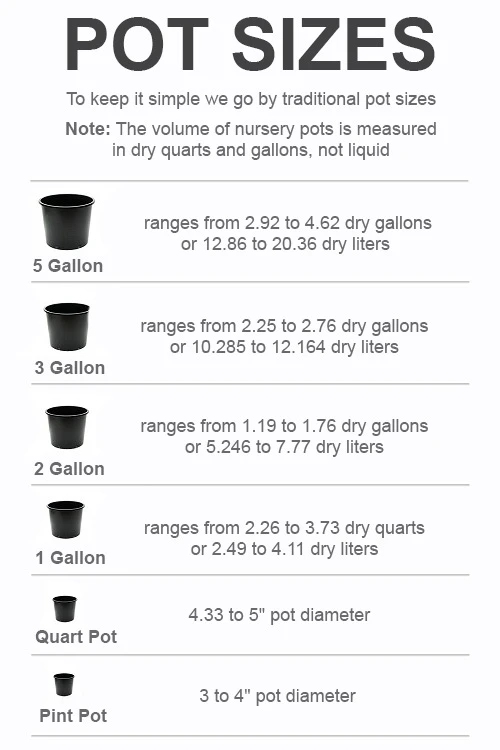
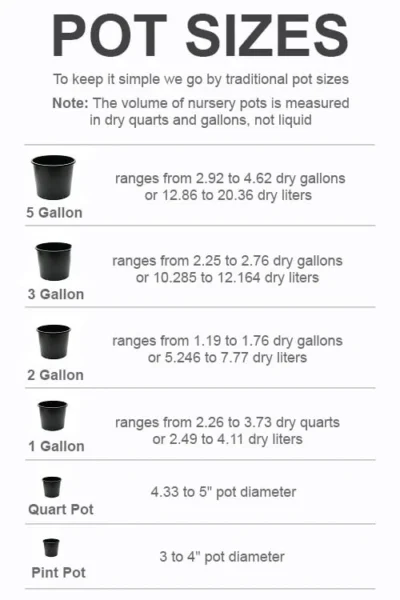
Dwarf Wax Myrtle (Myrica Pusilla) – 3 Gallon Pot
Original price was: $68.85.$48.20Current price is: $48.20.
- Protect Your Information, Shop with Safe Payments
- Friendly, efficient service, always online.
- Secure Shopping with Safe Payments
- Buy with confidence, backed by quality.

Dwarf Wax Myrtle
Myrica pusila
Other Names: Dwarf Candle-berry, Bayberry, Waxberry, Wax-Myrtle, Dwarf Southern Wax Myrtle, Myrica cerifera var. pumila
Plant Details
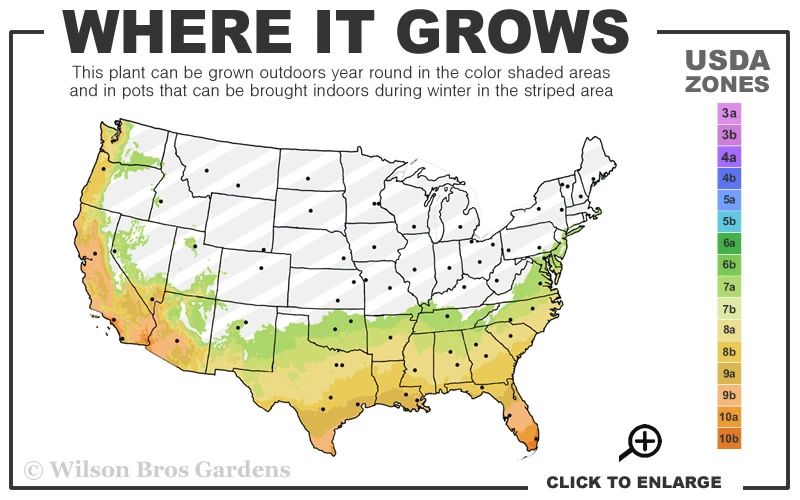
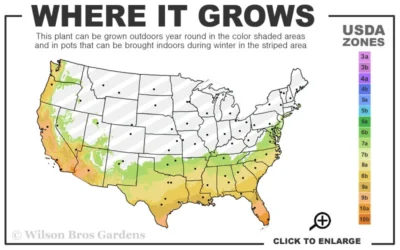
USDA Plant Hardiness Zones: 7a-10b Find Your Zone
Plant Type: Evergreen Shrub or Small Tree
Height at Maturity: 3-6′, depending on pruning
Width at Maturity: 3-6′, depending on pruning
Spacing: 4′ for solid hedges; 8′ for space between plants
Spacing: 4′ for solid hedges; 8′ for space between plants
Growth Habit / Form: Upright, Rounded, Mounding
Growth Rate: Moderate to Fast
Flower Color: Yellow, not very showy
Flower Size: Small in clusters
Flowering Period: Late Winter to Early Spring
Flower Type: Single, in clusters
Fragrant Flowers: Yes
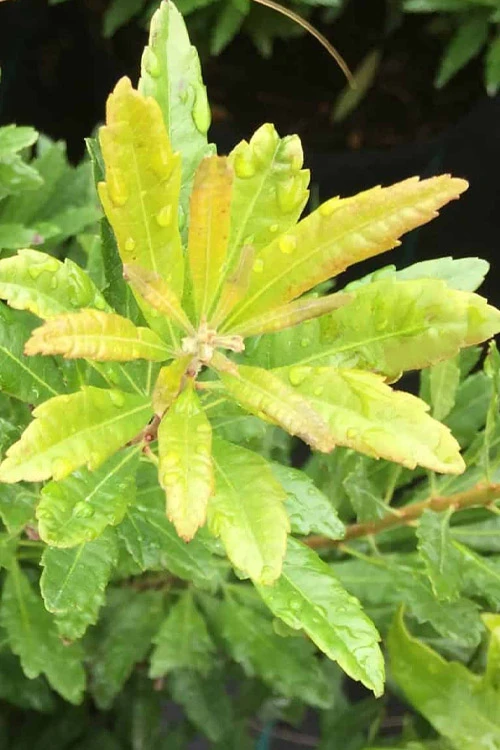
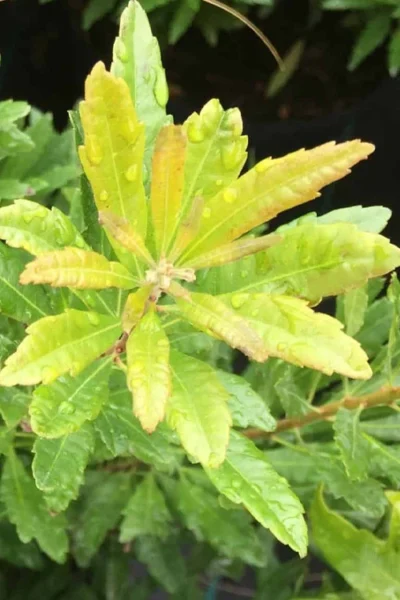
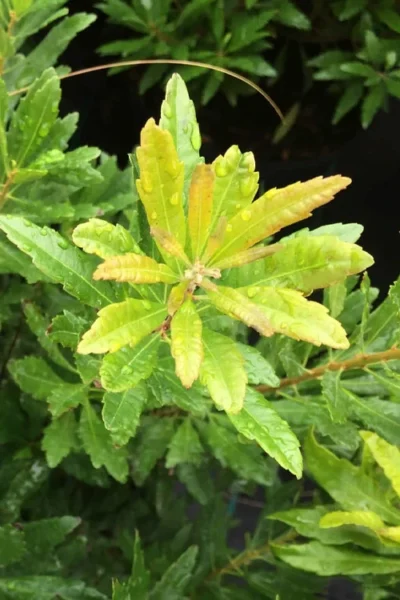
Foliage Color: Olive Green
Fragrant Foliage: Yes
Berries: Yes
Berry Color: Blue-Grey on female plants
Sun Needs: Full Sun, Morning Sun w/Dappled or Afternoon Shade, Afternoon Sun w/Morning Shade, Shade or Mostly Shade
Water Needs: Average, very low when established
Soil Type: Clay (well draining), Loam, Sandy, Silt
Soil Moisture / Drainage: Moist But Well Drained to Wet or Dry when established
Soil pH: 5.0 – 8.0 (Acid to Moderately Alkaline)
Maintenance / Care: Low
Attracts: Birds
Resistances: Deer – more info, Disease, Drought, Heat, Humidity, Insect, Rabbit, Wet Soils
Description
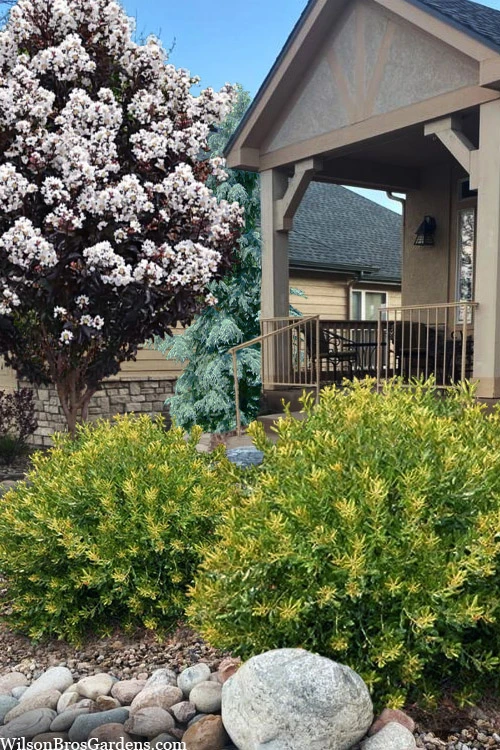
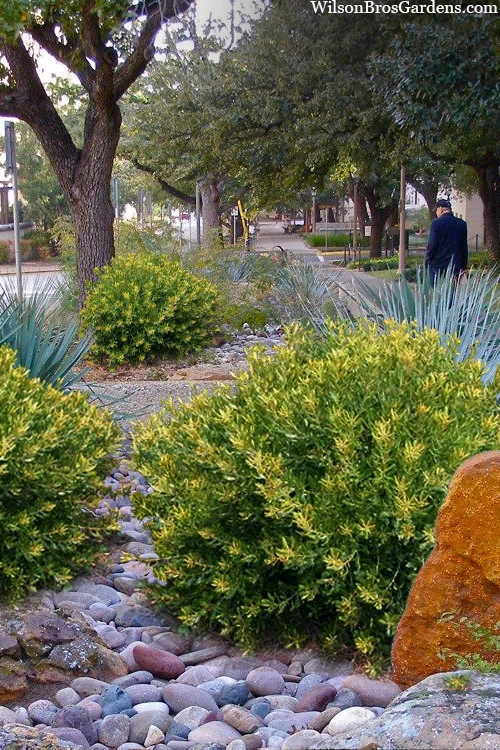
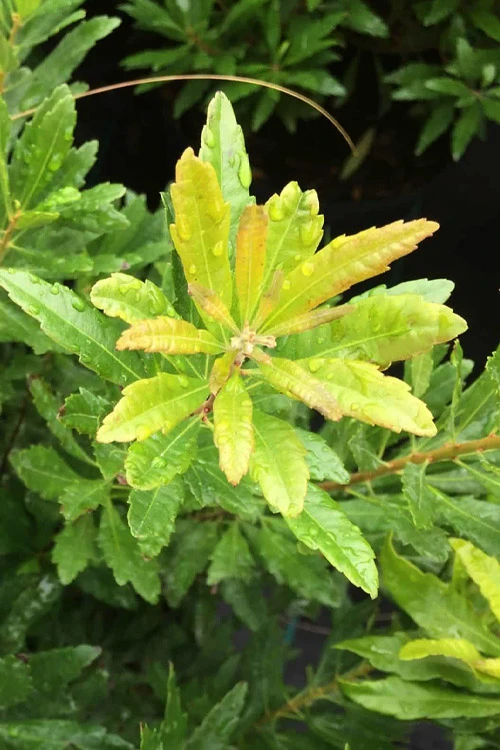
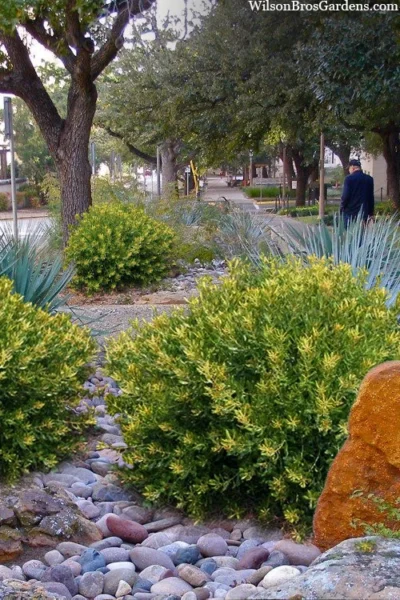
Valued for its aromatic, soft evergreen foliage, rounded mounding form 3 to 5 feet tall and equally as wide depending on pruning, and its adaptability to sun or shade or wet or dry soil, it’s no wonder the Dwarf Wax Myrtle has become a staple in Texas and other landscapes across the South, and up the east and west coastlines where winter low temperatures don’t drop below 5F. The fine-textured wispy foliage consists of bayberry-scented evergreen leaves that are dark green above and olive green beneath, giving a two-toned or glossy appearance which contrasts nicely with many other types of plants in the landscape. Very similar to Myrica cerifera, southern wax myrtle, it responds well to trimming for a more formal shape or hedge, or lower branches can be removed to form an attractive small tree. You might be happy to know the deer turn their nose up to Dwarf Wax Myrtle and it is highly tolerant to salt spray, heat, and humidity, making it a fine choice for coastal landscapes and gardens.
Landscape / Garden Uses
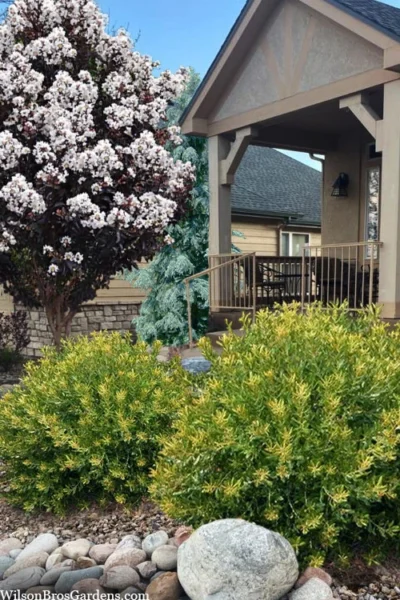
Growing in a rounded mound 3 to 5 feet tall and equally as wide depending on pruning, the Dwarf Wax Myrtle is an ideal for use as a specimen in smaller garden spaces or in groupings or as a natural or formal clipped hedge where space allows. Also excellent in home foundation plantings or on sunny or shady slopes for erosion control. A fine addition to bird gardens, native gardens, fragrance gardens, formal gardens, bog gardens and the Xeriscape (low water needs).
Growing Preferences
The Dwarf Wax Myrtle is very adaptive shrub that will grow in most any moist but well-drained to wet or dry soils in full sun or shade, though plants will be fuller with more sun. We suggest 4 or more hours of direct sunlight per day for best fullness. easy to grow in full sun to part shade. When young it prefers a consistently moist soil, but established plants are exceptionally drought tolerant. Those living and gardening on or near the coast will be happy to know that this attractive evergreen plant is highly tolerant of salt spray. No pruning is required however plants respond well to it for hedges or a more formal shape.
Helpful Articles
Click on the link below to find advice from our experts…
How To Plant & Care For A Wax Myrtle Shrub Or Tree
Plant Long & Prosper!
Meet The Wilson Brothers & Staff >
Questions? Contact Us!
Be the first to review “Dwarf Wax Myrtle (Myrica Pusilla) – 3 Gallon Pot”
Related products
Sale!
FRAGRANT PLANTS
Original price was: $99.97.$69.98Current price is: $69.98.
Sale!
FRAGRANT PLANTS
Original price was: $39.97.$27.98Current price is: $27.98.
Sale!
Original price was: $129.97.$90.98Current price is: $90.98.
Sale!
FRAGRANT PLANTS
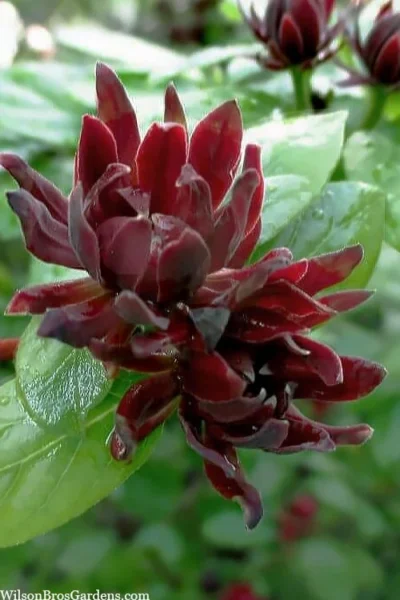
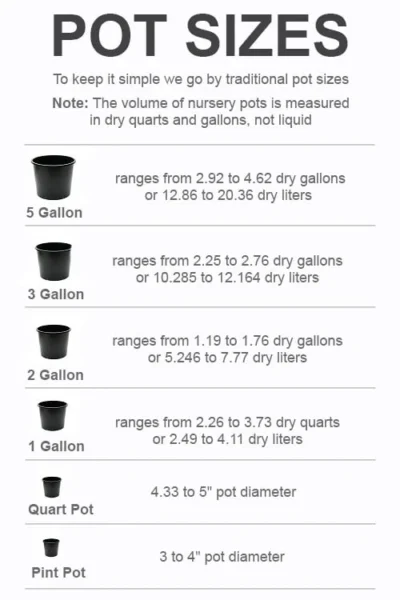
Simply Scentsational Sweetshrub (Calycanthus ) – 2 Gallon Pot
Original price was: $59.97.$41.98Current price is: $41.98.
Sale!
Original price was: $49.97.$34.98Current price is: $34.98.
Sale!
Original price was: $39.97.$27.98Current price is: $27.98.
Sale!
FRAGRANT PLANTS
Original price was: $108.85.$76.20Current price is: $76.20.
Sale!
FRAGRANT PLANTS
Original price was: $39.97.$27.98Current price is: $27.98.
Reviews
There are no reviews yet.